

Miami public transport combines Metrorail, Metromover and Metrobus, operated by Miami-Dade Transit. Metrorail links downtown with several communities to the south and north, while Metromover serves central districts and buses connect locations including Miami International Airport with downtown.
- Services: Metrorail, Metromover and Metrobus.
- Airport connection: Metrorail meets Miami International Airport at the MIA station.
- Downtown connection: Metrorail and Metromover serve central Miami; Metrobus Route 7 links the airport station and downtown stops.
- Passes: The county offers 1-Day, 7-Day and 1-Month passes.
Which Miami transit services can you use?

Miami-Dade Transit operates three services: Metrorail, Metromover and Metrobus. Together, they cover different kinds of trips, from longer journeys across the county to movement around central Miami.
Metrorail is a 25-mile dual-track system. Its route runs from Kendall through South Miami, Coral Gables and downtown, then continues north to the Civic Center/Jackson Memorial Hospital area, Brownsville, Liberty City, Hialeah and Medley.
Metromover is an elevated service through central districts. Its 21 stations run between Financial District station in Brickell and School Board station in the Omni area, across the Omni, Inner and Brickell loops. It opened to the public in April 1986.
Metrobus fills in connections between rail stations and destinations along its routes. For instance, Route 7 links the MIA Metrorail station with downtown locations and Historic Overtown.
How do you read the Miami Metro map?
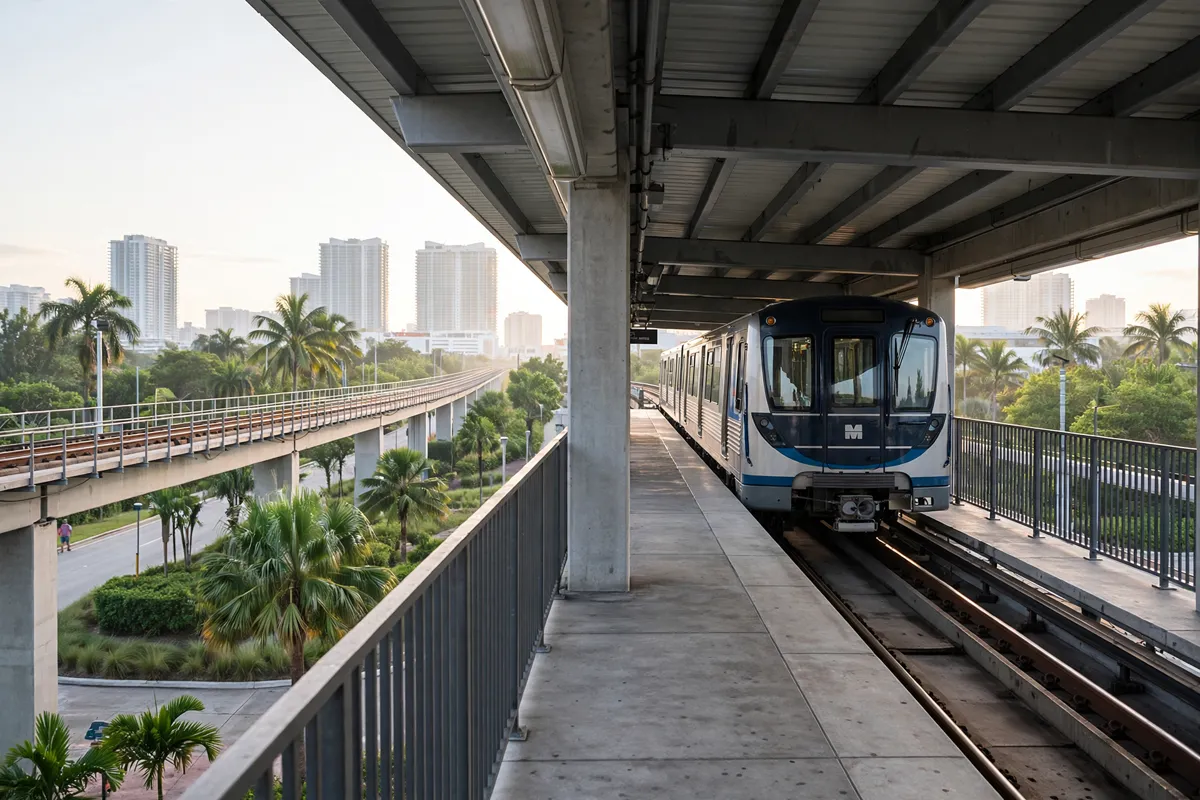
Read the Miami Metro map as a rail network with Metrorail routes crossing wider parts of the county and Metromover loops serving central Miami.
Start by locating your destination, then identify whether it is on Metrorail, one of the Metromover loops or a Metrobus route. The Metrorail line connects places such as Kendall, Coral Gables and downtown with communities farther north. In the centre, Metromover’s Omni, Inner and Brickell loops serve different parts of the downtown area.
For a trip involving more than one service, look for a transfer point before setting out. Metrorail connects with Brightline at Historic Overtown/Lyric Theatre station and with Tri-Rail at the MIA and Tri-Rail stations. The airport rail stop is called the MIA Metrorail station, distinct from Tri-Rail Airport Station.
Use route names as well as station names when planning a bus connection. Route 7, for example, has stops at the airport station and several downtown destinations; Routes 37 and 57 connect the MIA station with other rail stations and areas.
How do you get from Miami International Airport to downtown?
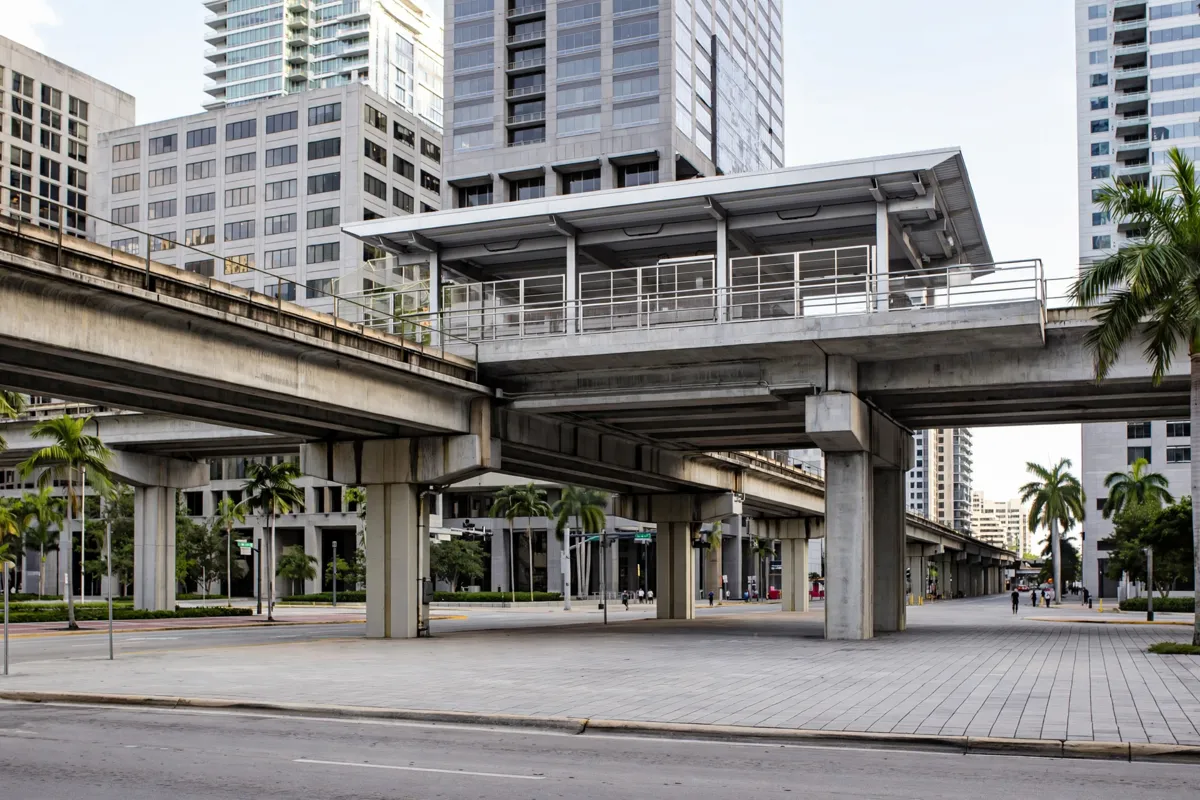
Metrorail and Metrobus connect Miami International Airport with downtown, with the MIA Metrorail station serving as the rail link.
Route 7 runs between the MIA Metrorail station and the Downtown Bus Terminal, with stops including the Main Library, Historical Museum of South Florida, Miami Art Museum, MDC Wolfson Campus and Historic Overtown/Lyric Theatre Metrorail station.
At the airport station, Route 7 buses stop on the ground level: drop-offs are on the east side and pick-ups are on the west side. The Miami International Airport transportation guide covers routes to the hotel area.
For connections beyond downtown, Metrorail meets Brightline at Historic Overtown/Lyric Theatre station. At the MIA and Tri-Rail stations, riders can connect with Tri-Rail.
Other airport-area bus links include Route 37, which connects the MIA Metrorail station with the City of Coral Gables and Douglas Road Metrorail station, and Route 57, which links Tri-Rail Airport Station, the MIA Metrorail station and South Miami Metrorail station. Route 37 has no Saturday or Sunday service; Route 57 operates on weekdays only.
Royal Budget Inn is about an 11-minute drive from Miami city centre.
What transit options serve Miami Beach?
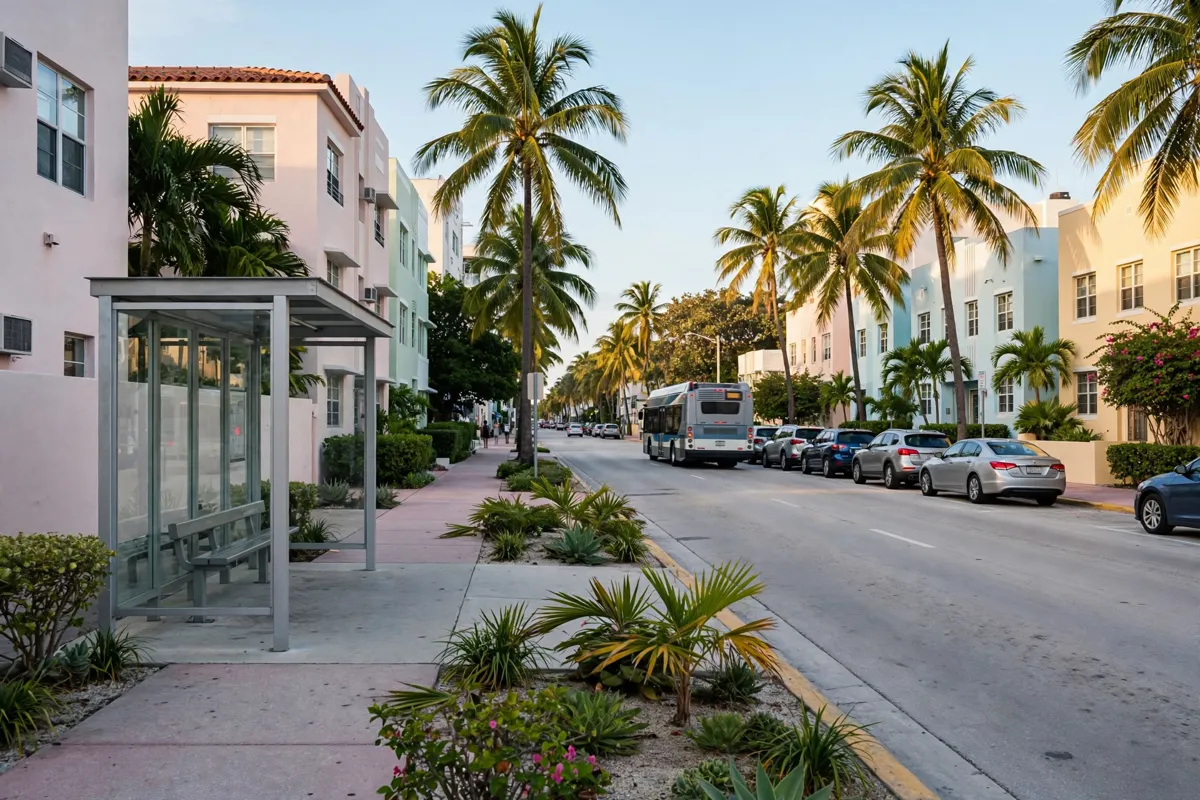
Check Miami-Dade Transit’s route information for a suitable service and connection to Miami Beach before travelling. For destination planning, this guide to getting from the hotel area to Miami Beach focuses on that journey.
What should you know about Miami transit fares and passes?
Miami-Dade Transit’s fare information gives the current pass prices and transfer rules; fares and service details can change, so check the official site before you go.
The regular passes cost $5.65 for one day, $29.25 for seven days and $112.50 for one month. The 1-Day Pass is valid from first use until 2:00 a.m. the next day; the 7-Day Pass covers seven consecutive days from first use.
Free bus-to-bus transfers are available within three hours of first use, as are free bus-to-rail and rail-to-bus transfers. Bus-to-bus transfers do not apply to round trips. To access these transfer fares, pay with contactless payment, an EASY Card or an EASY Ticket; cash fares are charged in full each time you board.
Metrorail accepts contactless payment, EASY Card, EASY Ticket and the GO Miami-Dade Transit app. Metrobus also accepts cash.
Metromover service hours are 5:30 a.m. to 10 p.m., seven days a week. If museums are on your downtown itinerary, the Miami museums planning guide can help you organise that part of your visit.
FAQs
What public transport services operate in Miami?
Miami-Dade Transit operates Metrorail, Metromover and Metrobus. Metrorail covers longer cross-county journeys, while Metromover serves central Miami.
Does Metrorail connect with Tri-Rail?
Yes. Metrorail connects with Tri-Rail at the MIA and Tri-Rail stations.
Can you transfer between Miami buses and rail?
Free bus-to-rail and rail-to-bus transfers are available when you use an accepted payment method.
Where does Metromover run?
Metromover serves 21 stations between Financial District station in Brickell and School Board station in the Omni area, on three loops.